
The Fault in Our Schools
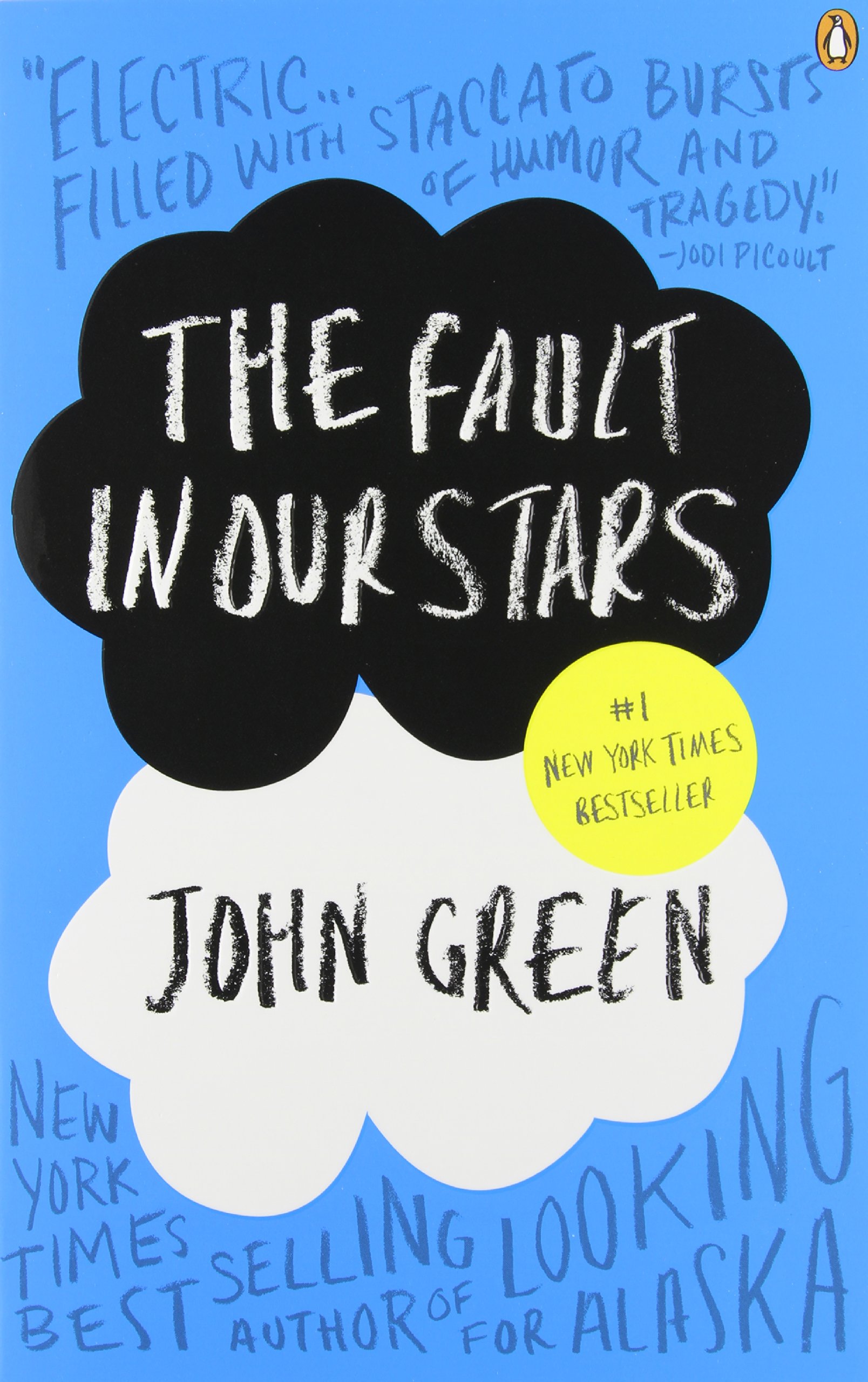
Sometimes, you read a book and it fills you with this weird evangelical zeal, and you become convinced that the shattered world will never be put back together unless and until all living humans read the book.
- John Green, The Fault in Our Stars
By this point I think it's pretty safe to assume that most people are familiar with John Green's 2012 novel The Fault in Our Stars, which debuted at #1 on the New York Times Best Seller list for Children's Chapter Books.
The book is about Hazel Grace Lancaster, a 16-year-old with thyroid cancer that has spread to her lungs. At her mother's behest she attends a cancer patient support group where she meets 17-year-old Augustus Waters, whose osteosarcoma caused him to lose his leg. The two bond immediately and agree to read each other's favorite novels. Augustus gives Hazel The Price of Dawn, and Hazel recommends An Imperial Affliction, a novel written by Peter Van Houten about a cancer-stricken girl named Anna that parallels Hazel's own experience. After Augustus finishes reading her book, he is frustrated upon learning that the novel ends abruptly without a conclusion. Hazel explains the novel's author had retreated following the novel's publication and has not been heard from since.
However, I would argue that The Fault in Our Stars is not a cancer story. It foremost a love story, with some of the elements of an adventure story, about two people who happen to have cancer. It is not just a love story about two teenagers, but a love story about people's conenction with fiction. Hazel and Augustus are so profoundly affected by An Imperial Affliction that seeking out Van Houten becomes their primary goal and acts as a motivator to keep going and keep living. It demonstrates the power that books can have on young people, and the comfort that they can provide. Hazel finds solace in the parallels between the character of Anna in An Imperial Affliction and her own life, and is only shaken by the abrupt ending.
That’s part of what I like about the book in some ways. It portrays death truthfully. You die in the middle of your life, in the middle of a sentence.
- John Green, The Fault in Our Stars

Shailene Woodley and Ansel Elgort in The Fault in Our Stars (2014).
In spite of it's receiving critical acclaim, there were several unfavourable opinions that began to surface upon it's release. One piece in The Daily Mail criticised it as being "distasteful" and inappropriate for young teens. It stressed that the depictions of illness, depression and sexuality are inappropriate for readers, branding The Fault in Our Stars as being part of the "sick-lit" genre (alongside Jenny Downham's Before I Die, and Jodi Picoult's My Sister's Keeper). The problem with this mindset is that if we don't allow dark themes to be explored in fiction for teens, where do we draw the line? One of the many wonderful things about fiction, and particularly YA fiction, is that it can sensitively explore topics that are otherwise difficult and unpleasant to face. It's an important step in becoming an adult, as it allows you to explore and grow an understanding of more adult themes without having to go through the sadness of losing a loved one or dying yourself to understand them. Turning a blind eye to the realities of the world never works, and fiction written specifically for young people is one of the only places where we can approach these ideals. It is closed-minded and unhealthy to sweep life under the rug.
The thing that bothered my about The Daily Mail piece is that it was a bit condescending to teenagers. I'm tired of adults telling teenagers that they aren't smart, that they can't read critically, that they aren't thoughtful, and I feel like that article made those arguments."
- John Green
In America, the popular YA novel was found unsavoury enough as to warrant a ban in Riverside Unified School District middle schools. According to The Press Enterprise, 37 books have been challenged in the district since 1988, but only one - The Chocolate War by Robert Cormier - had been banned until now. The book disappeared from shelves after one parent said that the plot, language and content was inappropriate for young people.
Parent and committee member Julie Boyes, who voted against banning the book, said she thought Green was trying to show what a dying 16-year-old girl might go through, such as being angry and choosing to have sex because she didn’t know if she’d live to 17. However, Arlington principal and committee member Betsy Schmechel questioned whether students could handle reading about terminally ill teens.
The thing that kept hitting me like a tidal wave was these kids dealing with their own mortality, and how difficult that might be for an 11-year-old or 12-year-old reading this book.
- Betsy Schmechel
The issue I take with this is that when did we decide that kids realising their own mortality was a bad thing? Green himself notes this, observing that he is both "happy and sad" about the book ban.
I am happy because apparently young people in Riverside, California will never witness or experience mortality since they won’t be reading my book, which is great for them.But I am also sad because I was really hoping I would be able to introduce the idea that human beings die to the children of Riverside, California and thereby crush their dreams of immortality.
- John Green
Regardless of how you feel about it, it's hard not to argue that The Fault in Our Stars has had a pretty big impact in the literary world. However, as far as I'm concerned, you can't look past the fact that the reason it has had such an impact, and been such a success as both a book and a film, is because young people connect with it. If young people are finding something in this book that is important to them and connects with them, then how can it possibly be bad?


