Showing posts with label love. Show all posts

The Fault in Our Schools


Sometimes, you read a book and it fills you with this weird evangelical zeal, and you become convinced that the shattered world will never be put back together unless and until all living humans read the book.
- John Green, The Fault in Our Stars 

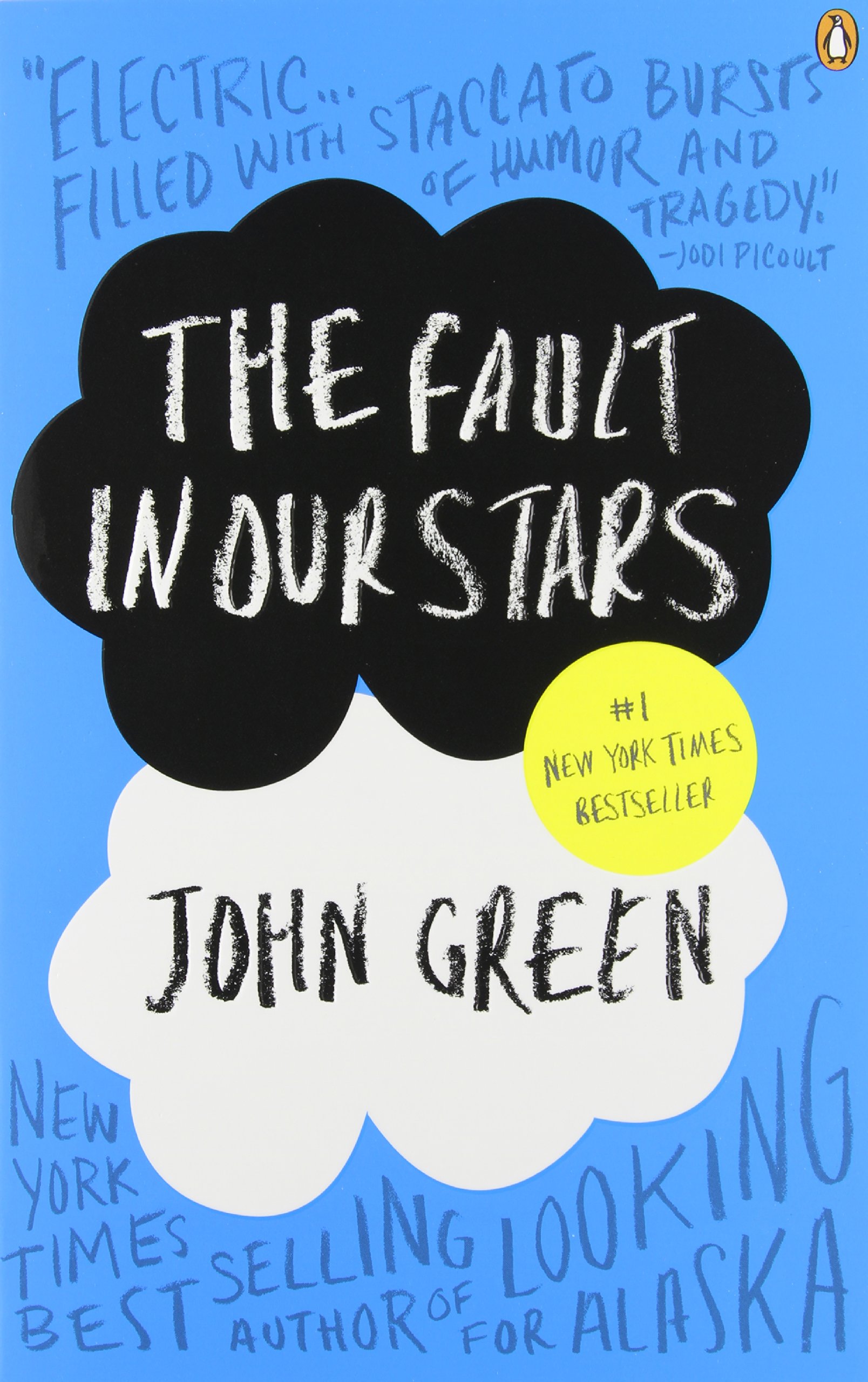
By this point I think it's pretty safe to assume that most people are familiar with John Green's 2012 novel The Fault in Our Stars, which debuted at #1 on the New York Times Best Seller list for Children's Chapter Books.

The book is about Hazel Grace Lancaster, a 16-year-old with thyroid cancer that has spread to her lungs. At her mother's behest she attends a cancer patient support group where she meets 17-year-old Augustus Waters, whose osteosarcoma caused him to lose his leg. The two bond immediately and agree to read each other's favorite novels. Augustus gives Hazel The Price of Dawn, and Hazel recommends An Imperial Affliction, a novel written by Peter Van Houten about a cancer-stricken girl named Anna that parallels Hazel's own experience. After Augustus finishes reading her book, he is frustrated upon learning that the novel ends abruptly without a conclusion. Hazel explains the novel's author had retreated following the novel's publication and has not been heard from since.

However, I would argue that The Fault in Our Stars is not a cancer story. It foremost a love story, with some of the elements of an adventure story, about two people who happen to have cancer. It is not just a love story about two teenagers, but a love story about people's conenction with fiction. Hazel and Augustus are so profoundly affected by An Imperial Affliction that seeking out Van Houten becomes their primary goal and acts as a motivator to keep going and keep living. It demonstrates the power that books can have on young people, and the comfort that they can provide. Hazel finds solace in the parallels between the character of Anna in An Imperial Affliction and her own life, and is only shaken by the abrupt ending.

That’s part of what I like about the book in some ways. It portrays death truthfully. You die in the middle of your life, in the middle of a sentence.
- John Green, The Fault in Our Stars 

Shailene Woodley and Ansel Elgort in The Fault in Our Stars (2014).

In spite of it's receiving critical acclaim, there were several unfavourable opinions that began to surface upon it's release. One piece in The Daily Mail criticised it as being "distasteful" and inappropriate for young teens. It stressed that the depictions of illness, depression and sexuality are inappropriate for readers, branding The Fault in Our Stars as being part of the "sick-lit" genre (alongside Jenny Downham's Before I Die, and Jodi Picoult's My Sister's Keeper). The problem with this mindset is that if we don't allow dark themes to be explored in fiction for teens, where do we draw the line? One of the many wonderful things about fiction, and particularly YA fiction, is that it can sensitively explore topics that are otherwise difficult and unpleasant to face. It's an important step in becoming an adult, as it allows you to explore and grow an understanding of more adult themes without having to go through the sadness of losing a loved one or dying yourself to understand them. Turning a blind eye to the realities of the world never works, and fiction written specifically for young people is one of the only places where we can approach these ideals. It is closed-minded and unhealthy to sweep life under the rug.

The thing that bothered my about The Daily Mail piece is that it was a bit condescending to teenagers. I'm tired of adults telling teenagers that they aren't smart, that they can't read critically, that they aren't thoughtful, and I feel like that article made those arguments."
- John Green 

In America, the popular YA novel was found unsavoury enough as to warrant a ban in Riverside Unified School District middle schools. According to The Press Enterprise, 37 books have been challenged in the district since 1988, but only one - The Chocolate War by Robert Cormier - had been banned until now. The book disappeared from shelves after one parent said that the plot, language and content was inappropriate for young people.

Parent and committee member Julie Boyes, who voted against banning the book, said she thought Green was trying to show what a dying 16-year-old girl might go through, such as being angry and choosing to have sex because she didn’t know if she’d live to 17. However, Arlington principal and committee member Betsy Schmechel questioned whether students could handle reading about terminally ill teens.

The thing that kept hitting me like a tidal wave was these kids dealing with their own mortality, and how difficult that might be for an 11-year-old or 12-year-old reading this book.
- Betsy Schmechel

The issue I take with this is that when did we decide that kids realising their own mortality was a bad thing? Green himself notes this, observing that he is both "happy and sad" about the book ban.

I am happy because apparently young people in Riverside, California will never witness or experience mortality since they won’t be reading my book, which is great for them.But I am also sad because I was really hoping I would be able to introduce the idea that human beings die to the children of Riverside, California and thereby crush their dreams of immortality.
- John Green

Regardless of how you feel about it, it's hard not to argue that The Fault in Our Stars has had a pretty big impact in the literary world. However, as far as I'm concerned, you can't look past the fact that the reason it has had such an impact, and been such a success as both a book and a film, is because young people connect with it. If young people are finding something in this book that is important to them and connects with them, then how can it possibly be bad?

The Ocean is Six Miles Deep


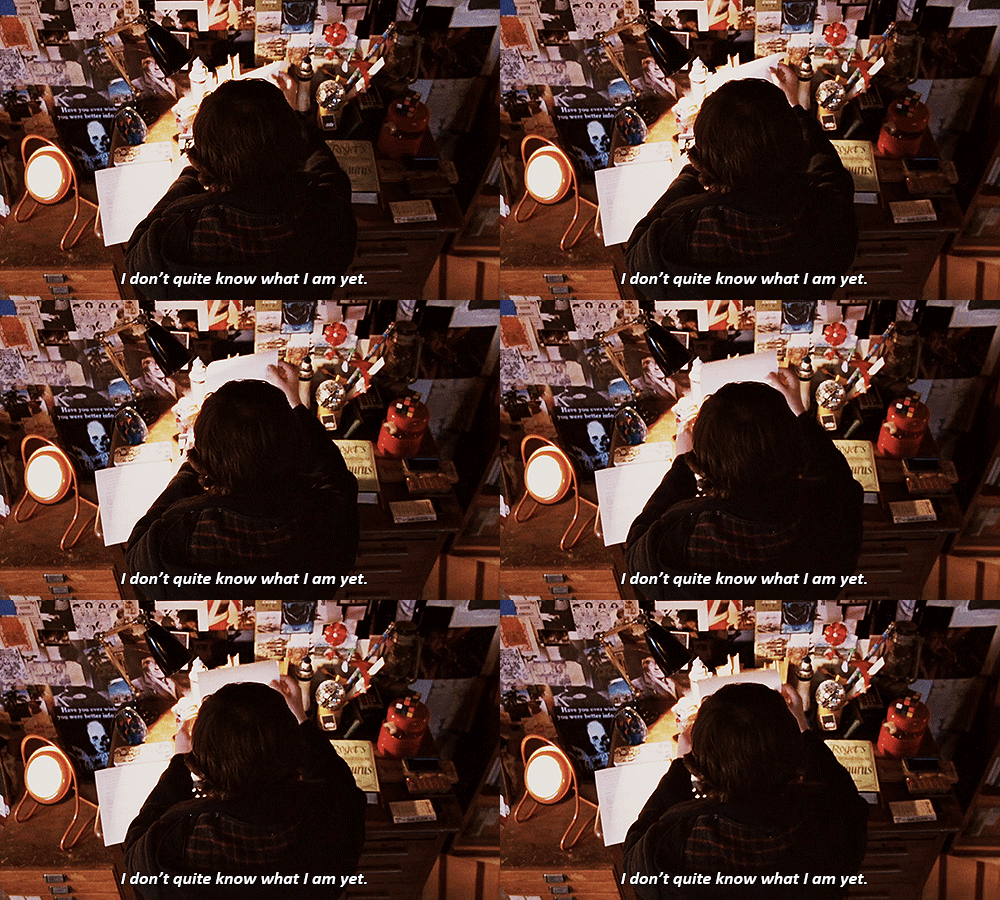
"I don't know if I've come of age, but I'm certainly older now. I feel shrunken, as if there's a tiny ancient Oliver Tate inside me operating the levers of a life-size Oliver-shaped shell. A shell on which a decrepit picture show replays the same handful of images. Every night I come to the same place and wait till the sky catches up with my mood. The pattern is set. This is, no doubt, the end.”
-Joe Dunthorne, Submarine

In the seaside town of Swansea, Wales lives almost 15 year old, Oliver Tate. Precocious and with a penchant for theatrics, Oliver is navigating his way through the murky and uniquely perilous waters of adolescence. Joe Dunthone’s 2008 critically acclaimed novel Submarine is a coming-of-age story that has connected with young adults all over the world, and continues to reach broader audiences as a film adaption released in 2010.

As Submarine was written by Dunthorne as a young adult studying creative writing at the University of East Anglia, it’s unsurprising that it is successful in connecting to the trials and tribulations of it’s readers. Though a coming-of-age novel in the most traditional sense, it can be better classified as a bildungsroman. A subset of the coming-of-age story, bildungsromans focus on the psychological and moral growth of a protagonist throughout their youth, in which character development is extremely important.

Concerned with taking it upon himself to resolve his parents teetering marriage, whilst attempting to seduce his classmate Jordana Bevan, and trying to figure out where he fits in the world, Oliver masters his formidable, uninhibited powers of imagination in order to put everything in its right place.

"Depression comes in bouts. Like boxing. Dad is in the blue corner."
Upon finding an empty bottle of tricyclic antidepressants in the bin by his dad's bedside table, Oliver discovers that his father struggles with bouts of depression. This is a common theme in YA fiction as it's presence has the ability to help readers on an individual basis. These novels have the opportunity to provide readers with a realistic representation of people struggling with depression, and serves as a constant reminder that you're not alone.

Oliver and Lloyd often pose the question "How deep is the ocean?" to one another, and this reoccurring thought serves as an anchor for reality as the answer is always the same. Though their lives may be rocked by the current or caught in a raging tempest, the depth of the ocean is a constant. In the film, this is further enhanced when Oliver requests that Jordana ask him how deep the ocean is, simply because he knows the answer.

Diving into the depths of middle-aged malaise is unsurprisingly difficult for a teenager. Especially for someone who has admitted that it’s “strange to hear your mother talk about being human because, honestly, it's too easy to forget.”
(Submarine 2010)
"I want the evening upon which we lose our collective virginities to be special. I'm no parthenologist but I suspect that Jordana's virginity is still intact. Her biological knowledge is minimal. She thinks that a perineum is to do with glacial moraine."
On his quest to commence a story of teenage passion with the troubled and alluring Jordana, Oliver discovers the difficulties of losing his virginity and trying to navigate the depths of heartache. Through love letters and attempts at grand romantic gestures, he stumbles his way through the world of romance, which he supposes probably "will not matter when [he's] forty-three".

The importance of the portrayal of love in YA fiction lies in it's serving as a reminder for why it matters so much, and that it's not something to take for granted. The role of love in Submarine is particularly interesting as it's told from the male perspective. Though love is a very popular topic among female readers, it is not as common that a story with a male protagonist looks at the ups and downs of love and sexuality. Typically, love is more often presented as a reward for the male hero, and not something they have to earn.

Additionally the way in which Dunthorne addresses sex is beneficial to the reader, as it is portrayed as a real thing that adults and teenagers have. Not talking about sex is unproductive, unrealistic and unhealthy for young people. It's important that it is not made out to be this perfect thing, but nor is it something that is scary and should be avoided. The use of sexuality in YA fiction is useful in encouraging healthy and safe exploration of sexuality.

“I spin around on the swivel chair and look up at the ceiling; Oliver being Oliver being Oliver being Oliver. I am suddenly aware of the separation between my-actual-self and myself-as-seen-by-others. Who would win in an arm wrestle? Who is better-looking? Who has the higher IQ?” 

Many coming-of-age stories highlight the difficulties of struggling to realise your own identity in the face of pressures to conform
. Though adults are certainly not immune from this idea, many young people struggle with the temptation to obscure individual interests or values in order to fit in. Oliver subscribes to this issue.

Though he does not approve of bullying, he finds himself being peer pressured into tormenting one of his classmates, Zoe Preece. Though decidedly aligning himself with his bully friends in order to impress Jordana, Oliver struggles with his guilt over taking part in Zoe's harassment. This in conjunction with his oddball nature and ever changing list of hobbies and interests, reads as an authentic take on someone struggling to discover their own identity.

The role of identity in YA fiction is a frequently occurring one as, in theory, finding your place between being a child and being an adult is a teenagers main concern. In this period you often try out different styles, different friends and different values, and as a result every young persons search for identity is unique. Reading provides the opportunity to slip into character as someone else, take on someone else's identity, and so can aid the development of your own.
(Submarine, 2010)
In spite of some of the content in Submarine, Dunthorne does a remarkable job of dealing with serious issues in a fun and relatable way.

It's difficult being a teenager and realising that you can't control everything, nobody can, and that your parents are people too and often are as clueless as you are. Everyone is in the same boat and the only thing that you can be certain about is that the ocean is six miles deep. Spending time with fictional characters who's problems may be similar, though often exaggerated, allows the reader to find solace and look at aspects of themselves or their lives that may be otherwise painful to look at. Following someone's journey into adulthood gives readers the opportunity to make sense of the messy business of growing up.

Joe Dunthorne's Submarine allows you to see and accept contradictions that are inherent in human behaviour and, just as Oliver realises that his problems will matter to him when he's forty-three, can encourage you to consider the events and moments in your own life that have marked your own coming of age.